Expert Care for Age-Related Macular Degeneration

Our board-certified retina specialists provide compassionate, evidence-based care for patients with AMD. Using the latest technology and techniques, we develop treatment plans that look and feel right for you. We tailor everything to your eyes, lifestyle, and disease stage, emphasizing both immediate intervention and long-term vision preservation for a whole-picture approach.

Related Videos Age-Related Macular Degeneration

woman smiling

What Is Age-Related Macular Degeneration?

AMD is a progressive eye condition that affects the macula, the small central portion of the retina responsible for sharp, detailed vision. Damage to the macula can make it difficult to read, recognize faces, drive, or see fine detail. There are two main types of AMD.
Dry AMD

Characterized by a gradual thinning of the macula and the accumulation of yellow deposits called drusen. Vision loss is typically slow but can be significant over time.

Wet AMD

Less common but more severe, this form involves abnormal blood vessel growth under the retina, which can leak fluid or bleed, causing rapid central vision loss. Early detection and careful monitoring are key to preventing severe vision impairment. Regular eye exams and imaging help identify changes before symptoms become noticeable.

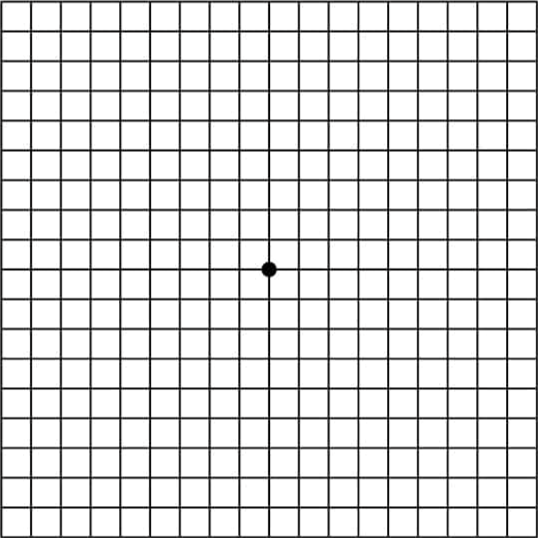
Normal Amlser Grid Appearance

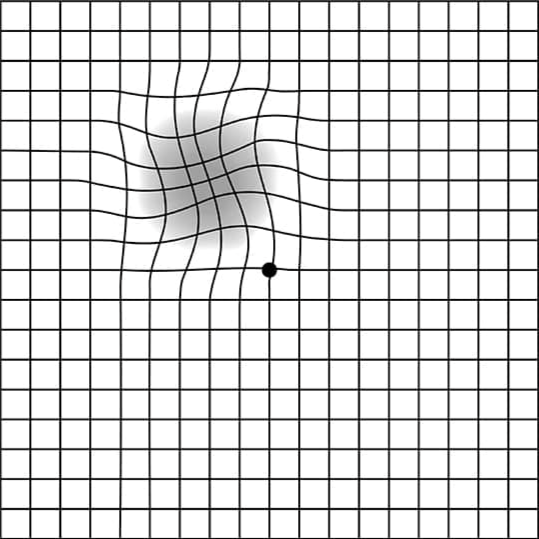
Amlser Grid as it Might Appear to Someone with AMD

Why Choose Eye Surgeons of Indiana?

Our retina specialists combine advanced technology with compassionate care to provide the best outcomes available in macular degeneration treatment.

Board-Certified Expertise

Our doctors are highly trained in retinal diseases and have extensive experience treating AMD.

Comprehensive Diagnostic Imaging

We use state-of-the-art imaging tools, like OCT and retinal photography, to capture detailed pictures of the back of your eye, helping us detect changes early and protect your vision.

Evidence-Based Treatments

We offer the latest FDA-approved therapies, including intravitreal injections and nutritional guidance.

Long-Term Vision Planning

We focus on the full patient journey, from early detection to advanced treatment, helping slow disease progression and maintain independence now and into the future.

Patient-Centered Approach

Education and personalized plans explained with clarity and real human consideration ensure you understand your condition, treatment options, and expected outcomes.

Treatment Options for AMD

If you have been diagnosed or think you may have macular issues, there are many treatment options available to you at Eye Surgeons of Indiana.

Schedule a Consultation

Contact Us

Intravitreal Injections for Wet AMD

For wet AMD, intravitreal injections are the most effective way to stop disease progression and protect central vision.

How They Work

Medications are delivered directly into the vitreous (inner jelly-like substance) of the eye to inhibit abnormal blood vessel growth and reduce fluid accumulation.

Procedure Details

The procedure is performed in the office after numbing your eye. Most patients feel minimal discomfort; some describe a brief pressure sensation.

Frequency

Depending on disease activity, injections may be required monthly or at intervals tailored to the individual.

Outcomes

Clinical studies show that many patients experience stabilization or even improvement in central vision, preventing the rapid loss of vision associated with the overgrowth of blood vessels found in untreated wet AMD.

Nutritional Therapy for Dry AMD

For dry AMD, research shows that certain vitamins, minerals, and lifestyle adjustments can help slow progression.

I am happy with my care. They are compassionate, knowledgeable and caring.

L.J.

Professional & friendly all the way from 
check-in to surgeon. Best run office I’ve ever been to. Surgery & sight as promised.

Anne H.

Had a visit with Dr. Morrow today and he was very thorough and helpful. I’d recommend this establishment to anyone.

Aron J.

Very efficient. Wait time limited and they 
got me in quickly. Went above and beyond to make sure I was attended to.

MJ K.

Very good experience. The best part was meeting the team everyone was so friendly. And I like the Dr I had. He was very thorough.

Delores B.

I am thrilled with the level of service that 
I have received. All staff members have been excellent to work with.

Clay O.
Read More Real Patient Reviews

AREDS/AREDS2 Supplements

Specific formulations containing antioxidants, zinc, and copper have been shown to reduce the risk of progression to advanced AMD in patients with moderate disease.

These combinations were discovered in a year-long series of clinical trials called the Age-Related Eye Disease Study 1 and 2, hence the names AREDS and AREDS2 supplements.

Dietary Recommendations

A diet rich in leafy green vegetables, colorful fruits, omega-3 fatty acids (from fish or supplements), and low in processed foods supports retinal health. More specifics will be provided by a personal consultation with your retina specialist or eye doctor.

Lifestyle Adjustments

Maintaining healthy blood pressure, managing cholesterol, avoiding smoking, and exercising regularly can further reduce the risk of progression.

Combination Approaches for Mixed AMD

Some patients benefit from both intravitreal injections and nutritional support, especially if wet AMD develops on a background of dry AMD. Our specialists assess each case individually to create the most effective plan.

When to Seek Retina Treatment

Prompt evaluation is crucial if you notice any of the following:

  • Blurred or distorted central vision
  • Difficulty reading or recognizing faces
  • Sudden dark or empty spots in vision
  • Straight lines appearing wavy or bent

Even if vision changes seem minor, early intervention can prevent permanent vision loss. Our team emphasizes proactive monitoring to detect AMD changes before they become severe.

Banner media

The Importance of Long-Term Vision Planning

AMD is a chronic condition that often progresses over the years. At Eye Surgeons of Indiana, we focus on a long-term approach to care:

  • Regular follow-up exams and imaging
  • Ongoing patient education about lifestyle and nutrition
  • Adjustments to therapy as the disease evolves
  • Coordination with primary care for systemic risk factors like diabetes or hypertension

This strategy ensures patients receive timely treatment, maintain independence, and maximize visual function for as long as possible.

What to Expect During Your AMD Doctor Visit

  • Comprehensive eye examination, including visual acuity and slit-lamp eye microscope evaluation
  • OCT imaging to assess macular thickness and drusen
  • Discussion of lifestyle and nutrition factors
  • Personalized treatment recommendations based on the type and severity of AMD
  • Clear guidance on follow-up frequency and home monitoring

Results and What to Expect

Many patients receiving intravitreal injections notice their vision stabilizes, and in some cases even improves, because the treatment helps prevent further damage from fluid or bleeding under the retina.

Nutritional therapy, such as AREDS2 vitamins, can also play an important role by slowing the progression of certain forms of dry macular degeneration. Throughout your care, we will monitor your eyes closely so we can spot even the smallest changes early and adjust your treatment as needed.

Accessibility: If you are vision-impaired or have some other impairment covered by the Americans with Disabilities Act or a similar law, and you wish to discuss potential accommodations related to using this website, please contact our Accessibility Manager at 317.564.9077.
Contact Us