Protect Your Central Vision for a Clearer Tomorrow

Eye Surgeons of Indiana’s board-certified retina specialists provide advanced, personalized treatments for Age-Related Macular Degeneration (AMD), offering compassionate, long-term care to help patients maintain the sharp vision they need for life’s details. Whether you are newly diagnosed or managing disease progression, our team is committed to preserving your sight and quality of life.

Understanding AMD and Its Effects on Vision

Age-Related Macular Degeneration (AMD) is one of the leading causes of vision loss among adults over 50. The disease affects the macula of the retina, the central part of the tissue at the back of the eye, which is responsible for detailed vision. Because of this, it can make everyday tasks like reading, driving, and recognizing faces challenging. AMD occurs in two main forms:

Dry AMD

The most common type, characterized by thinning of the macular tissue and the buildup of yellow deposits called drusen. Vision loss is often slow but can become significant over time.

Wet AMD

Less common but more aggressive, wet AMD involves abnormal blood vessels growing under the retina, leaking fluid or blood, and causing rapid central vision loss.

Recognizing AMD early is essential for protecting vision and maintaining independence.

When to Seek AMD Care

Prompt evaluation is critical if you notice changes in your central vision. Seek a retina consultation if you experience:

  • Blurred or distorted central vision
  • Difficulty reading, driving, or recognizing faces
  • Dark or empty areas in the center of your vision
  • Changes in color perception

Our retina specialists emphasize preventive care and proactive monitoring. Early intervention allows us to slow disease progression through comprehensive macular degeneration AMD treatment in Anderson, especially if dry AMD develops into the more aggressive wet form.

Schedule a Consultation

Contact Us

The Value of Long-Term Management

Managing AMD effectively requires a long-term perspective. We cannot replace the retina as it ages, but by taking effective action, we can stop or slow its gradual degeneration.

Our team provides ongoing care with advanced imaging, regular follow-ups, and individualized treatment adjustments. This approach ensures each patient receives a unique plan that preserves vision over time, giving Anderson residents peace of mind about their sight.

AMD Treatments Available at Eye Surgeons of Indiana

We offer a comprehensive approach to AMD care, combining medical treatments, procedural interventions, and lifestyle guidance to protect your central vision.

Intravitreal Injections for Wet AMD

For wet AMD, intravitreal injections are the best practice standard. Delivered directly into the eye’s liquid center, these medications help:

  • Reduce retinal swelling and fluid accumulation
  • Slow or stop vision loss
  • Maintain or improve visual acuity

The procedure is performed in-office, usually well-tolerated, and vision is monitored to determine the optimal frequency of injections. Most patients experience minimal discomfort and notice benefits with timely treatment.

Nutritional Therapy for Dry AMD

For dry AMD, macular thinning, certain vitamins and minerals have been shown to slow disease progression. Our specialists recommend personalized nutritional therapy based on a special vitamin formula, which may include:

  • High-dose antioxidants (vitamins C and E)
  • Zinc and copper
  • Lutein and zeaxanthin (vital pigments from colorful vegetables)

Following these recommendations consistently, along with regular monitoring, can reduce the risk of AMD advancing to a more severe stage.

Lifestyle and Preventive Measures

Lifestyle changes play a significant role in AMD management:

  • Routine eye exams: Early detection and monitoring are essential
  • Quit smoking: Smoking greatly increases AMD risk
  • Healthy diet: Leafy greens, colorful vegetables, and omega-3 fatty acids support retinal health
  • UV protection: Sunglasses with UV filters protect the retina from sun damage

Combining these strategies with medical therapies maximizes long-term preservation of central vision.

Advanced Diagnostic Technology

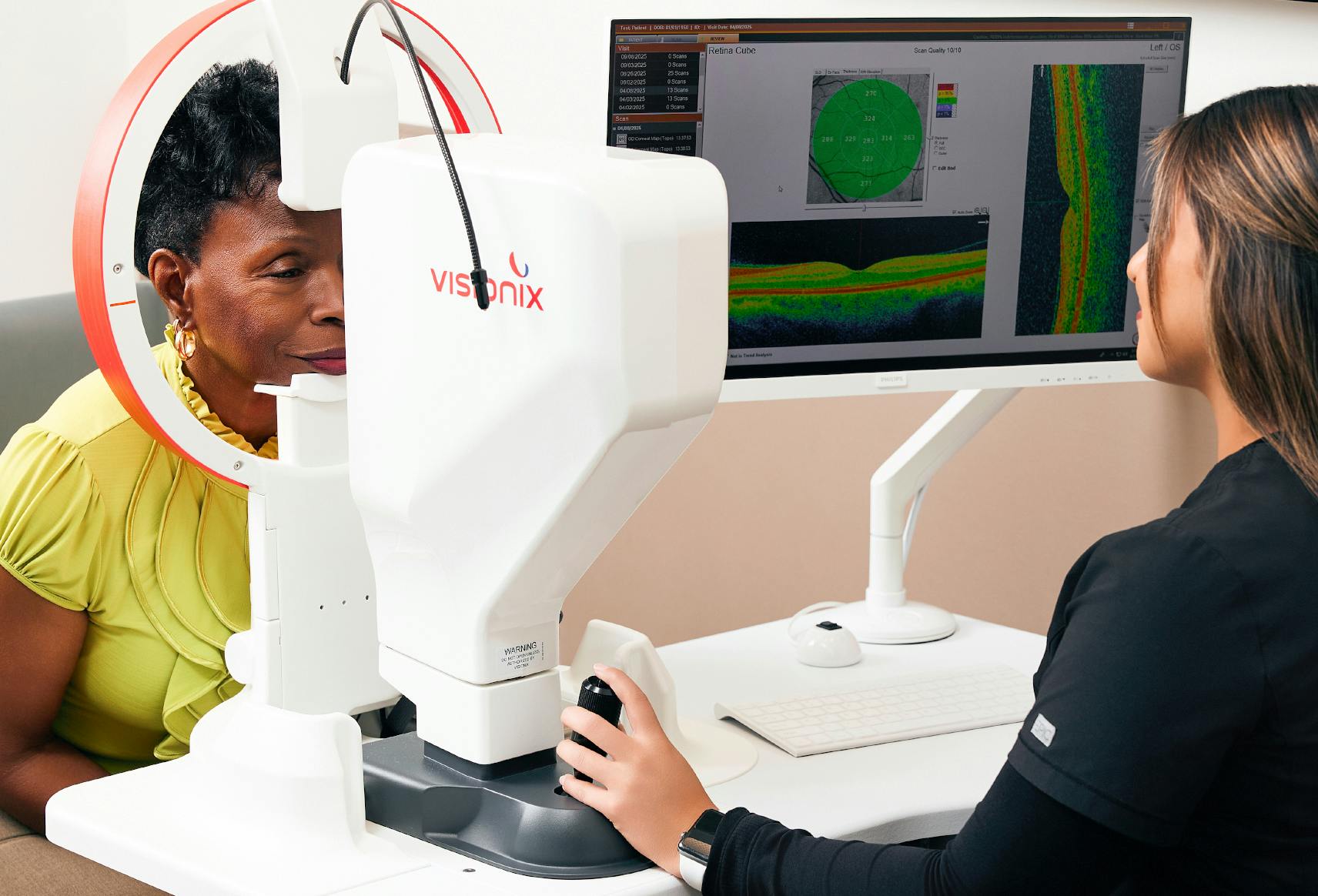
At Eye Surgeons of Indiana, we use state-of-the-art imaging tools to detect AMD early and monitor progression:

  • Optical Coherence Tomography (OCT): Provides detailed cross-sectional images of the retina
  • Fundus Photography: Maps drusen (yellow deposits) and retinal changes over time
  • Fluorescein Angiography: Detects abnormal blood vessel growth in wet AMD

These technologies allow our Anderson AMD specialists to develop personal treatment plans and intervene promptly before significant vision loss occurs.

woman smiling

Who Can Benefit from AMD Treatment?

Patients who may benefit include those who:

  • Have been diagnosed with dry or wet AMD
  • Want proactive strategies to preserve vision long-term
  • Notice changes in central vision
  • Are at risk of progression

Even early-stage AMD patients should consult a retina specialist to discuss monitoring and preventive care.

I am happy with my care. They are compassionate, knowledgeable and caring.

L.J.

Professional & friendly all the way from 
check-in to surgeon. Best run office I’ve ever been to. Surgery & sight as promised.

Anne H.

Had a visit with Dr. Morrow today and he was very thorough and helpful. I’d recommend this establishment to anyone.

Aron J.

Very efficient. Wait time limited and they 
got me in quickly. Went above and beyond to make sure I was attended to.

MJ K.

Very good experience. The best part was meeting the team everyone was so friendly. And I like the Dr I had. He was very thorough.

Delores B.

I am thrilled with the level of service that 
I have received. All staff members have been excellent to work with.

Clay O.
Read More Real Patient Reviews

Recovery and Follow-Up

Recovery depends on the type of treatment. Intravitreal injections are usually rapid; mild eye irritation or sensitivity may occur briefly afterwards, but normally activities can be resumed shortly after. Nutritional and lifestyle interventions simply require consistency and regular monitoring for long-term benefit. Routine follow-up visits are essential to track response to treatment, adjust care plans as needed, and ensure continued retinal health.

Expected Results

  • Timely intravitreal injections can help maintain or improve vision for wet AMD patients
  • Nutritional therapy in dry AMD may slow progression and reduce the risk of advanced AMD
  • Regular monitoring allows patients to maintain independence and continue activities like reading, driving, and enjoying hobbies

With ongoing care, patients in Anderson can preserve both their vision and their quality of life.

Why Choose Eye Surgeons of Indiana in Anderson, IN?

At Eye Surgeons of Indiana, our patients benefit from a team committed to preserving sharp central vision through advanced AMD care. We combine cutting-edge diagnostic imaging with personalized treatment plans to slow disease progression and protect daily sight. Our macular degeneration treatment in Anderson utilizes the latest therapeutic innovations to manage your eye health with precision.

Our specialists take time to understand your lifestyle, goals, and ocular health, ensuring every decision aligns with your long-term vision. From early detection to ongoing management, our approach balances expertise, integrity, and compassionate care to help Anderson residents maintain independence and clarity for years to come.

Age-Related Macular Degeneration (AMD) Treatment Frequently Asked Questions

Can AMD cause total blindness?

AMD affects central vision only; peripheral vision usually remains. Total blindness is rare.

Is treatment effective for everyone?

Early intervention and adherence to treatment plans significantly improve outcomes for most people.

How often should I have eye exams for AMD?

Monitoring typically occurs every 3–12 months, depending on severity and type. Your eye doctor will discuss what’s best for you and your eyes.

Are intravitreal injections painful?

Most patients experience mild discomfort or redness. Serious complications are rare. We work to manage any concerns with topical eye drops and medication, but the procedure is usually well-tolerated.

Do lifestyle changes make a difference?

Yes—healthy diet, UV protection, and smoking cessation all support retinal health. Living according to these guidelines can contribute to preventing retinal disease in the first place.

Accessibility: If you are vision-impaired or have some other impairment covered by the Americans with Disabilities Act or a similar law, and you wish to discuss potential accommodations related to using this website, please contact our Accessibility Manager at 765.246.3154.
Contact Us